Camille Comer
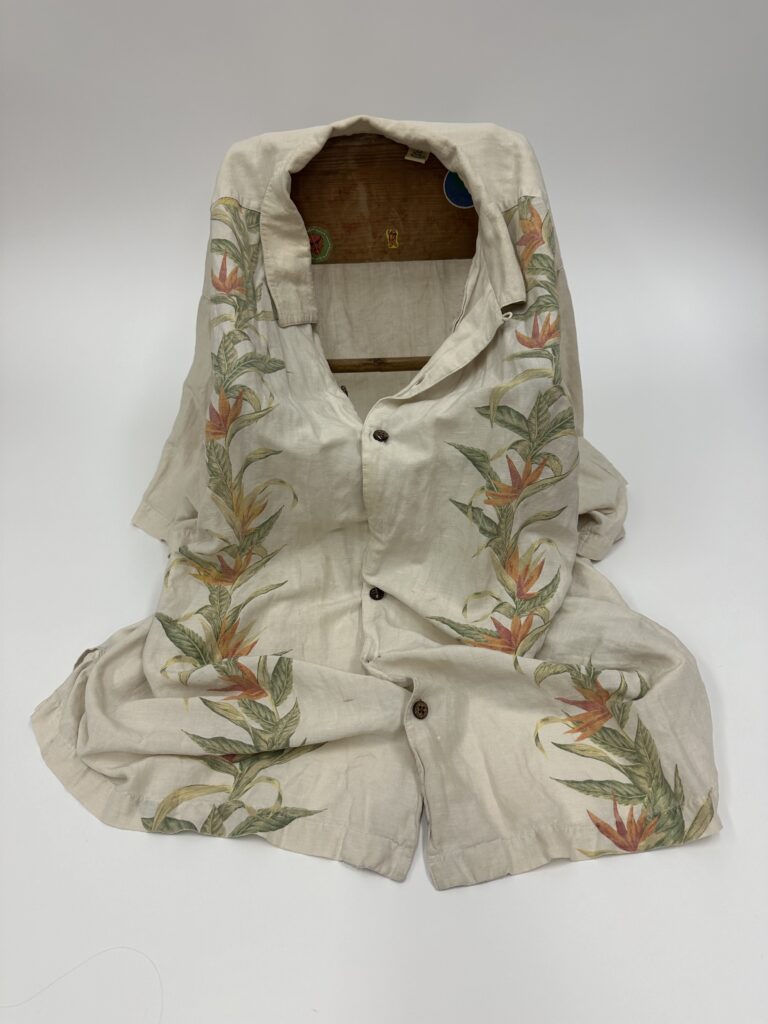
S. Camille Comer is a mixed media sculptor who was born and raised in Murfreesboro, Tennessee. Camille makes Fluxus style works about the relationships people share based on the artifacts left in the wake of these connections. She utilizes ubiquitous tools, familial artifacts, found objects, and fabrication to create scenes depicting her feelings towards the person the objects were either purchased, fabricated, or worn by. Camille received her BFA from Middle Tennessee State University in 2022 and is an MFA candidate and 3D/103 instructor at Washington State University in Pullman, Washington. She is expected to graduate in 2026. Camille has shown work at both universities, online at the Las Laguna Art Gallery in Laguna Beach, California, at The Walk in Closet in Murfreesboro, Tennessee, and in the Rotunda of Murfreesboro, Tennessee’s City Hall. She worked as a Metal Shop technician from 2021 through 2023 for Middle Tennessee State University and is currently the Visual Arts Production Coordinator for Tennessee’s Governor’s School for the Arts and has been since 2023. Camille has a public works sculpture that was commissioned by the Cannon County Art’s Center in Woodbury, Tennessee and has had multiple sculptures published in Collage: A Journal of Creative Expression and Blood Orange Review. She currently lives and works in Pullman, Washington, as an Instructor within the Foundations Area, under the Woodshop/Botcave Technician JJ Harty, and the Ceramics Technician Kassie Smith.
Artist Statement:
“Oh FUCK, I’m pregnant!” was the first thought that provoked the start of my current work. Relationships are consequential, especially parent and child dynamics, so this is what I began thinking about in terms of my own childhood. How have I been shaped by those around me? How do the objects I find to be sentimental define my bonds with those who raised me? Can I use my past to connect to those around me with only artifacts of my existence? I am working on being surrounded by interior thoughts that create portals into my past through found and fabricated objects and tools that tie together my experiences with those of the masses. In my experience, people generally understand movement and connection, whether physical or representational, through objects of their past, so why can’t I use objects from my past to convey what those ties of kinship have done for me as an adult? I have been comparing how I look at each attachment and which direction these memories have taken me. Representing my intimate dependance with my grandparents is where I’ve begun, starting in a very linear direction that moves towards my parents, mentors, and siblings from here.